Preconception Foundations
A Clinical Bundle on Male Fertility, Female Preconception, and Fetal Epigenetics
The fertility questions your patients bring you — failed IVF, unexplained infertility, recurrent miscarriage, low sperm count — are often downstream problems. The upstream variables were addressable months before conception was attempted.
This bundle covers the clinical framework for working upstream.
The fertility questions your patients bring you — failed IVF, unexplained infertility, recurrent miscarriage, low sperm count — are often downstream problems. The upstream variables were addressable months before conception was attempted.
This bundle covers the clinical framework for working upstream.
What's Included
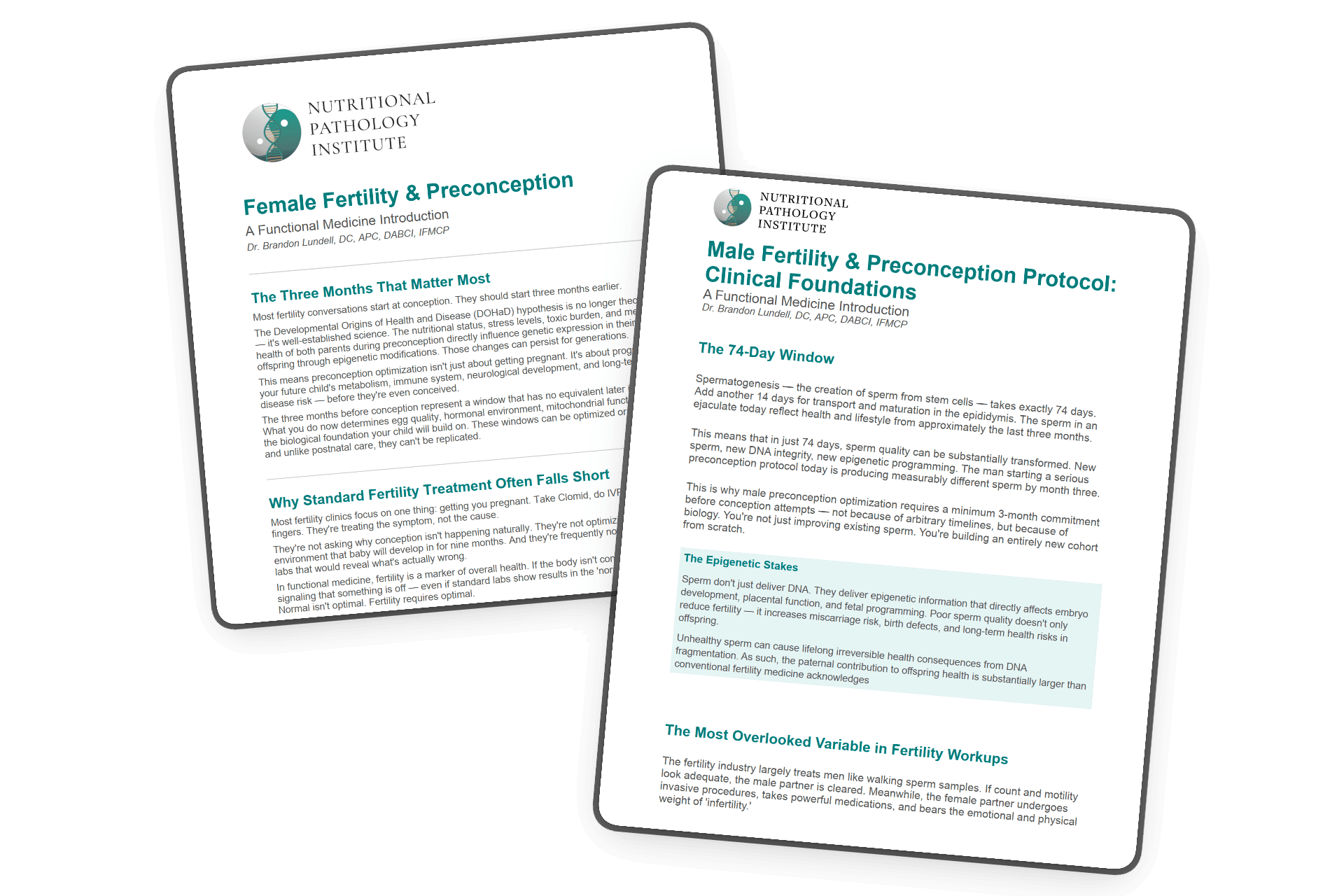
Female Fertility & Preconception: A Functional Medicine Introduction
Most fertility clinics focus on one outcome: getting the patient pregnant. The functional medicine framework asks a different question: what is the biological environment a child will spend nine months developing in, and is it optimal?
MTHFR mutations affect 40–60% of the population. If your patient has one and is taking folic acid, standard prenatal vitamins aren't just inadequate — they may be actively interfering with methylation. Elevated homocysteine is directly associated with miscarriage risk, and most fertility workups don't test for it.
This guide covers the three months before conception that have no equivalent window later in life, the methylation problem affecting a significant portion of your patient population, and the lab targets that matter for fertility — not population averages. Key markers included: ferritin, vitamin D, B12, homocysteine, hs-CRP, fasting insulin, TSH, and omega-3 index.
MTHFR mutations affect 40–60% of the population. If your patient has one and is taking folic acid, standard prenatal vitamins aren't just inadequate — they may be actively interfering with methylation. Elevated homocysteine is directly associated with miscarriage risk, and most fertility workups don't test for it.
This guide covers the three months before conception that have no equivalent window later in life, the methylation problem affecting a significant portion of your patient population, and the lab targets that matter for fertility — not population averages. Key markers included: ferritin, vitamin D, B12, homocysteine, hs-CRP, fasting insulin, TSH, and omega-3 index.
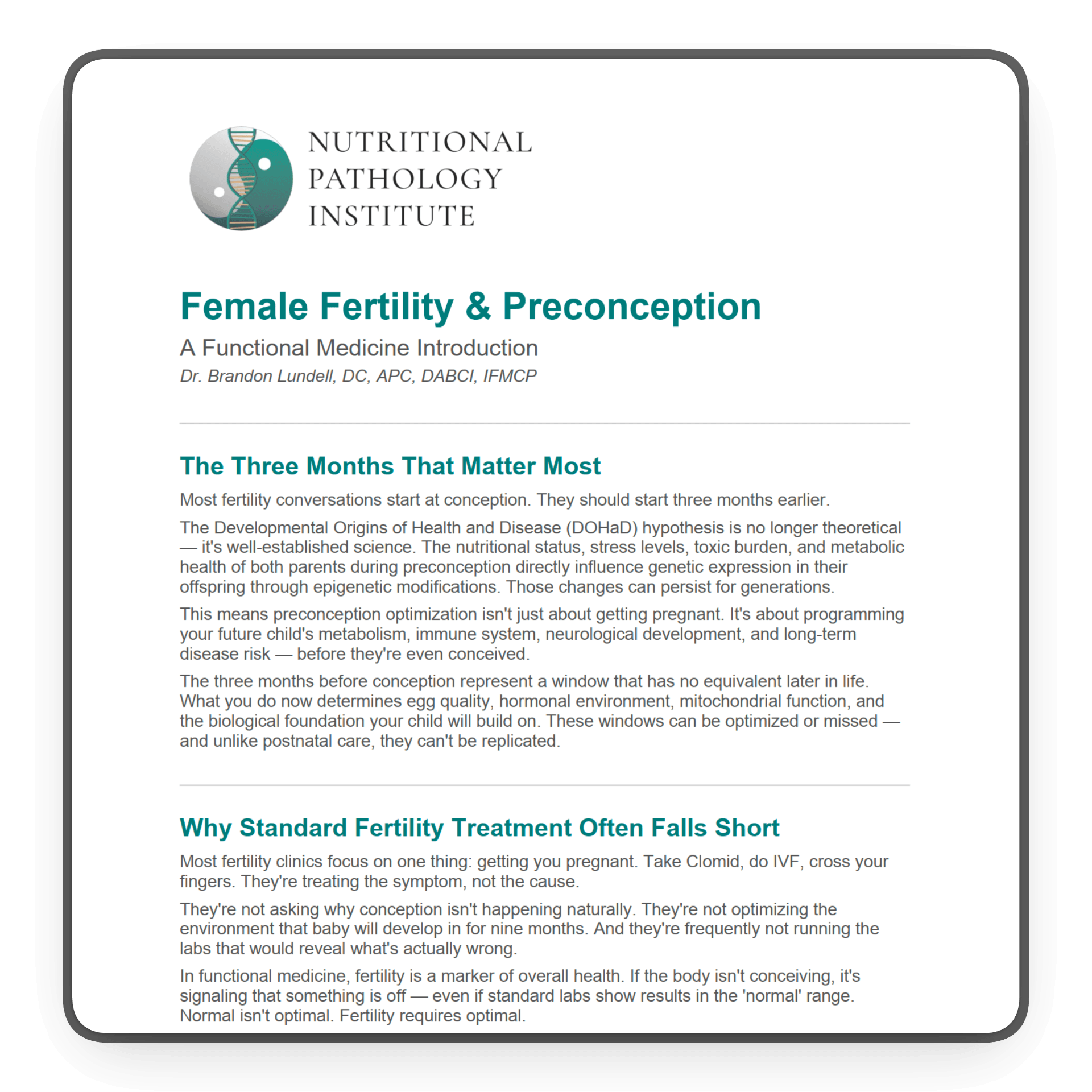
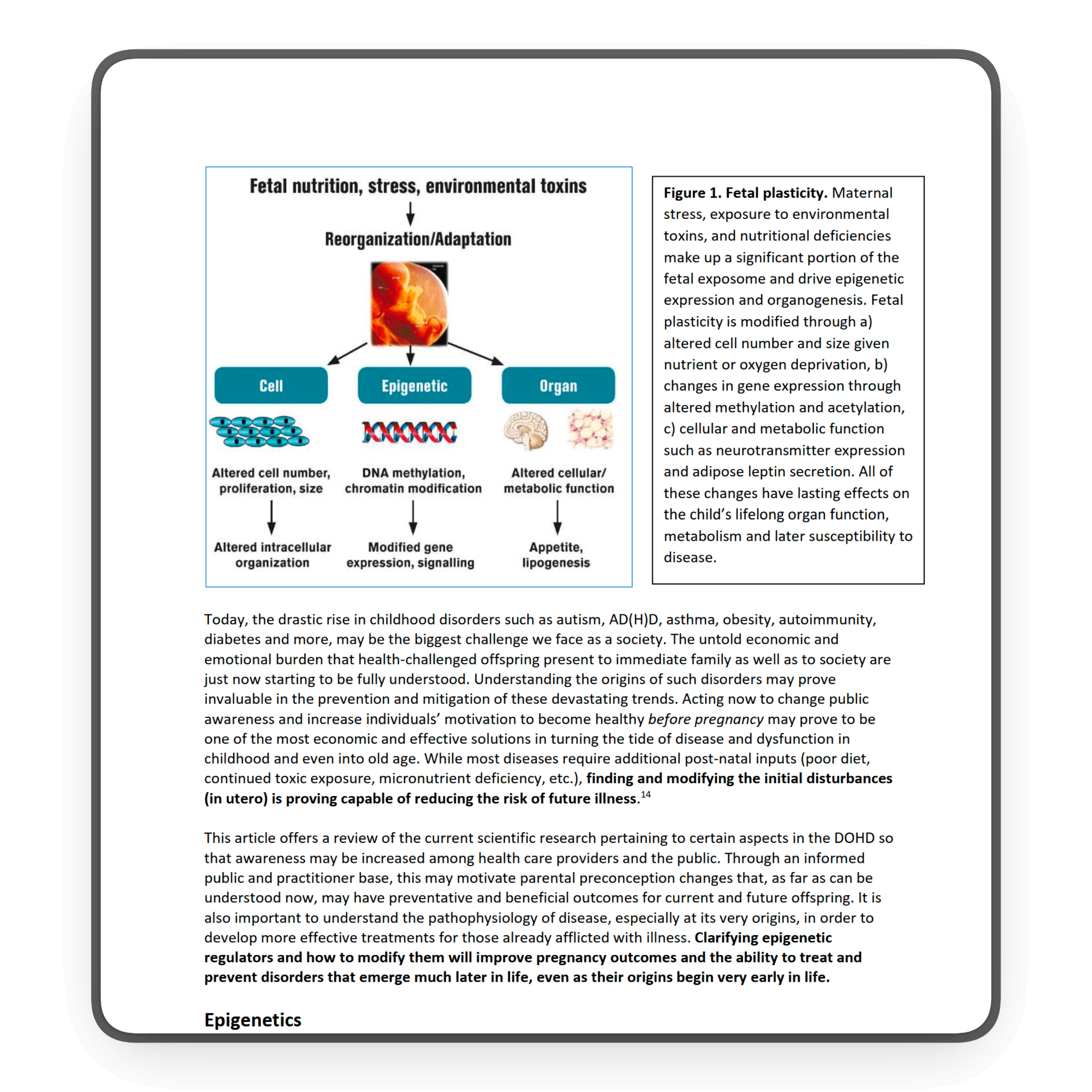
Male Fertility & Preconception Protocol: Clinical Foundations
Spermatogenesis takes exactly 74 days. The sperm in an ejaculate today reflect health, lifestyle, and environmental exposures from the past three months — including DNA integrity, mitochondrial function, and epigenetic information that affects embryo development and fetal programming.
Standard semen analysis checks count and motility. It doesn't evaluate the variables that determine whether a pregnancy is maintained or whether the child is healthy.
This guide covers the biology behind the 74-day window, four lifestyle factors with direct and measurable effects on sperm quality, the nutritional framework, and a foundation supplement protocol — with the clinical rationale behind each recommendation.
Standard semen analysis checks count and motility. It doesn't evaluate the variables that determine whether a pregnancy is maintained or whether the child is healthy.
This guide covers the biology behind the 74-day window, four lifestyle factors with direct and measurable effects on sperm quality, the nutritional framework, and a foundation supplement protocol — with the clinical rationale behind each recommendation.
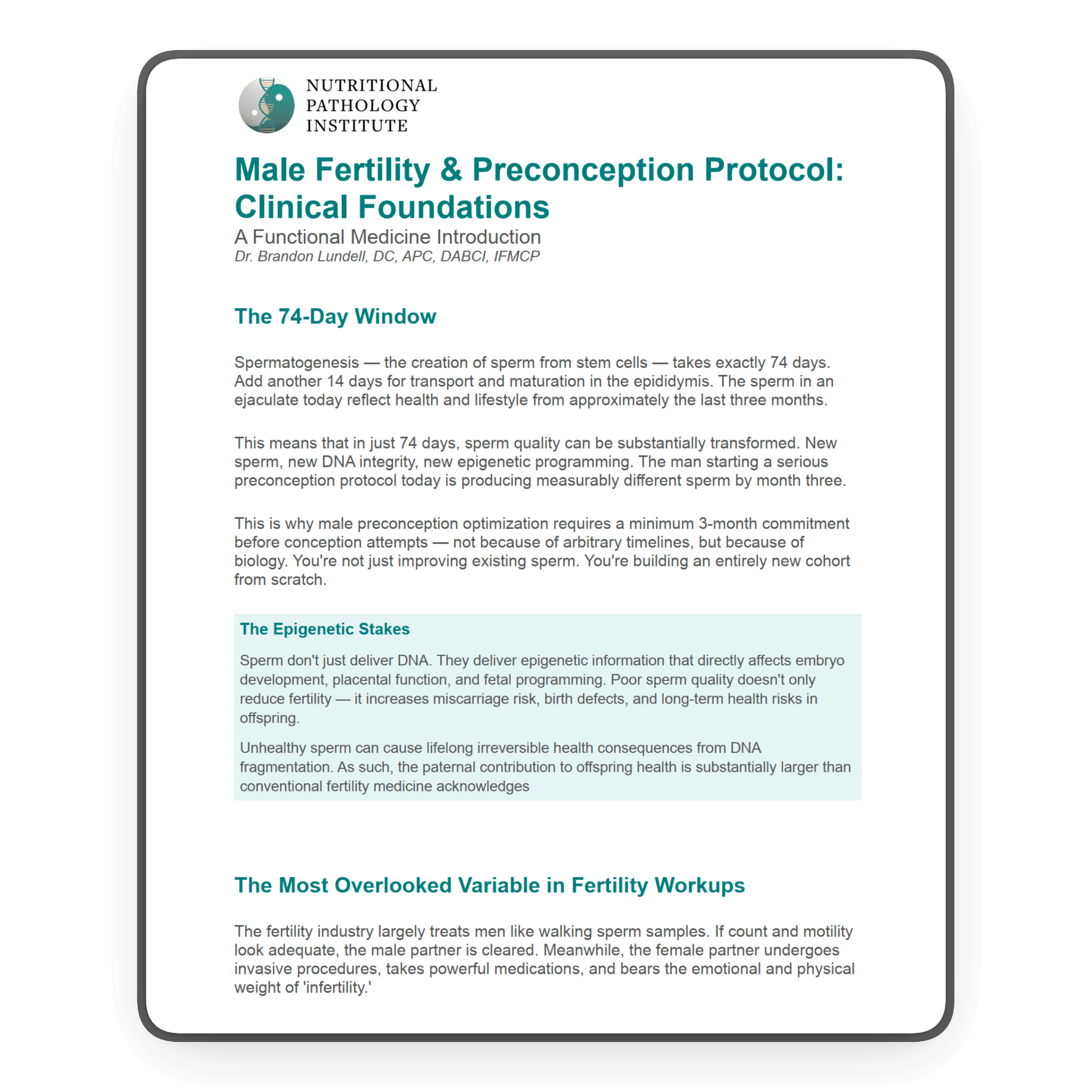
Fetal Epigenetics: How In Utero and Early-Life Environmental Inputs Program Lifelong Health
A clinical review article by Dr. Lundell covering the developmental origins of health and disease (DOHaD).
The nutritional status, inflammatory burden, toxic load, and hormonal environment of both parents during preconception directly influence genetic expression in their offspring through epigenetic modifications. Those changes can persist for generations.
This article reviews the mechanisms of fetal programming, the critical windows in organogenesis, and the most significant modifiable risk factors — including methylation status, iron, maternal inflammation, microbiome, and endocrine disruptors — with clinical implications for preconception assessment and intervention.
The nutritional status, inflammatory burden, toxic load, and hormonal environment of both parents during preconception directly influence genetic expression in their offspring through epigenetic modifications. Those changes can persist for generations.
This article reviews the mechanisms of fetal programming, the critical windows in organogenesis, and the most significant modifiable risk factors — including methylation status, iron, maternal inflammation, microbiome, and endocrine disruptors — with clinical implications for preconception assessment and intervention.
Who These Guides Are For
Ready for the full clinical protocols?
Explore the Fertility & Preconception Protocol Bundle.
Dr. Brandon Lundell, DC
Dr. Brandon Lundell, DC, DABCI, IFMCP has been in clinical practice for over 20 years and has trained more than 1,000 practitioners in functional medicine nationwide. He maintains an active waiting-list practice at Harmony Healing Center in Longmont, Colorado. The protocols in these guides reflect what's being applied in practice, not theoretical frameworks.
View Dr. Lundell's CV
View Dr. Lundell's CV
Patrick Jones - Course author
Get Preconception Foundations
Copyright © 2026
Created with