Free guide for practitioners

The NPI 
Urinalysis Guide

Most practitioners order a urinalysis. Few know what they're missing.

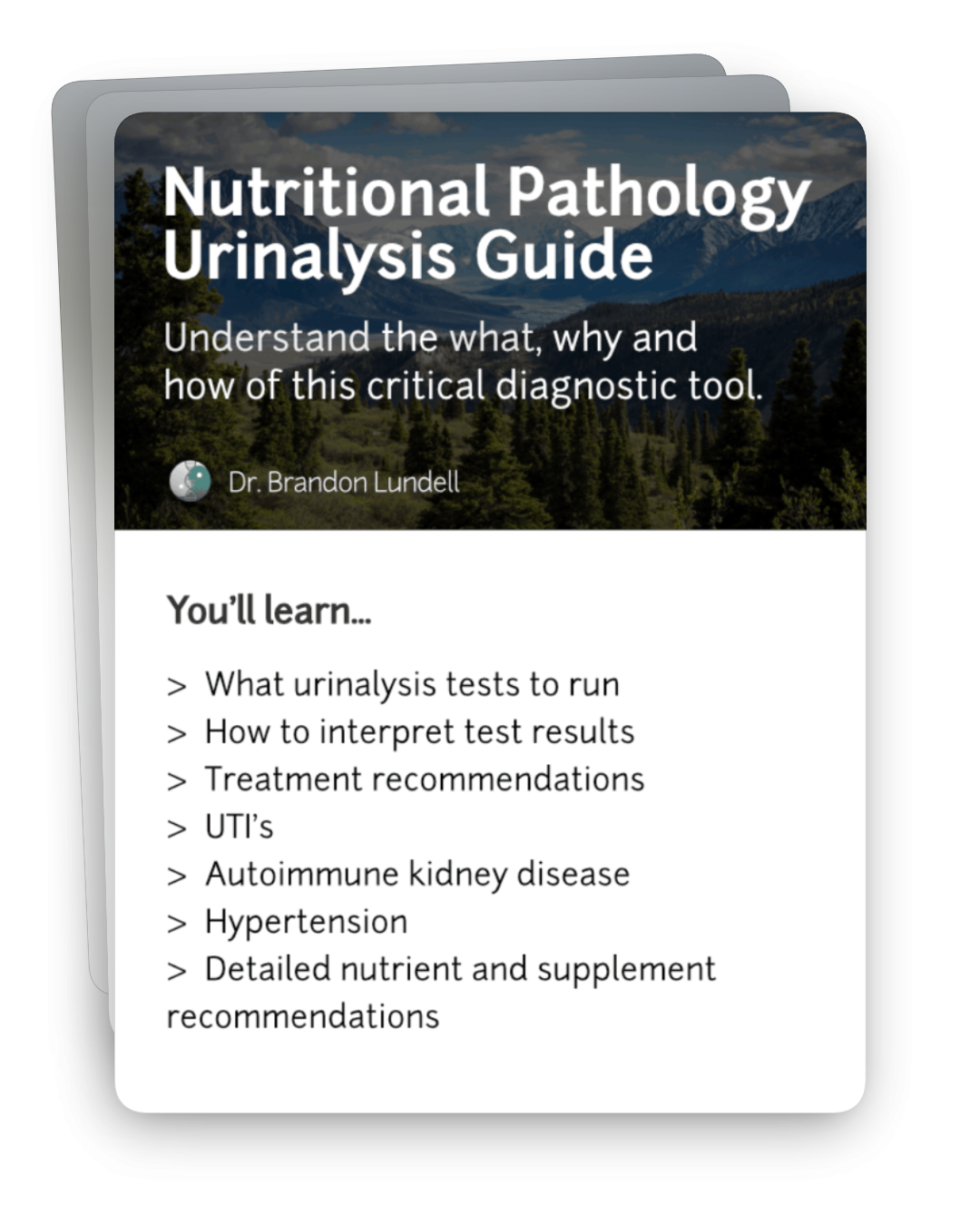
This 44-page clinical reference walks you through every marker, from collection variables to cast morphology, with the functional context that turns a routine test into an early warning system.

Enter your name and email, and we'll send it right over.
The dipstick gets ordered. Results come back. Most findings get a quick glance before the chart closes.

But a urinalysis done right, with microscopic examination and pattern recognition, can detect kidney damage 5 years before blood tests show anything. It localizes bleeding to the glomerulus or lower tract. It identifies cast types, crystal morphology, and subclinical infections that a dipstick simply cannot find.

The difference between a basic UA and a functional UA isn't the test. It's knowing what to look for.

What's Inside

Collection and pre-analytic variables — Specimen timing, handling errors, and interferences that render results useless before the lab processes them. More UA results are invalidated by collection errors than by any laboratory issue.

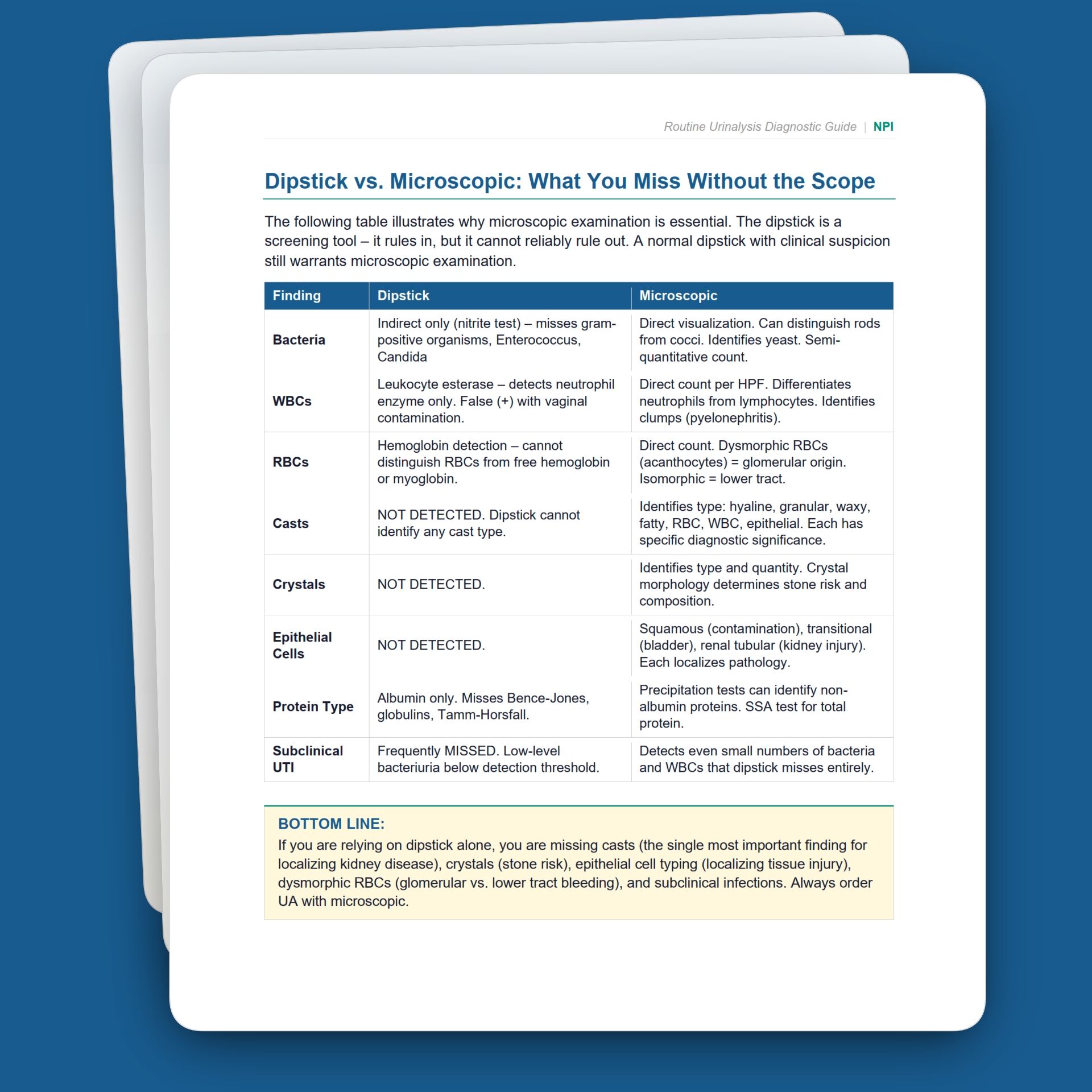
Dipstick vs. microscopic — A side-by-side breakdown of what each method catches and what it misses. Casts, crystals, epithelial cell typing, dysmorphic RBCs, and subclinical infections all require the scope. If you're relying on dipstick alone, you're not getting the full picture.

Red flags requiring immediate referral — Seven specific findings with the appropriate clinical actions and urgency level for each.

Marker-by-marker interpretation — Appearance, specific gravity, pH, protein, glucose, ketones, blood, bilirubin, urobilinogen, nitrites, leukocyte esterase, WBCs, epithelial cells, casts, crystals, and microalbumin — each with functional clinical context, pattern significance, and support protocols.
Pattern recognition — How to connect UA findings to clinical diagnoses across infectious, glomerular, metabolic, hepatobiliary, and renal damage presentations. Individual markers gain diagnostic power when read as patterns.

Clinical protocols — Kidney support, UTI, and autoimmune kidney disease, with specific nutrient dosing ranges.

Medication-induced nephrotoxicity — A quick-reference table covering NSAIDs, PPIs, aminoglycosides, contrast dye, lithium, ACE inhibitors, and acetaminophen — and the functional approach to each.

Advanced urine testing — When to order 24-hour collections, culture and sensitivity, cytology, organic acids, toxic metals, and urinary hormone metabolites.
Meet Your Instructor

Dr. Brandon Lundell, DC

Dr. Brandon Lundell has been interpreting urinalysis with microscopic examination in active clinical practice for over 20 years and has trained more than 1,000 practitioners in functional lab interpretation. This guide reflects what he uses clinically.

View Dr. Lundell's CV
Patrick Jones - Course author

Get the NPI Urinalysis Guide Today

Created with