What Peptides Are and Why They Belong in Clinical Practice
Peptides are signaling molecules, not pharmacological overrides — they bind existing receptor systems and initiate gene expression cascades whose effects can persist for days or weeks after the peptide itself has been cleared. The distinction between a peptide's short half-life and its durable downstream effects is one of the most clinically important concepts in this space, and it starts here.
The Science: Why Cellular Optimization Must Come
First
Peer-reviewed research demonstrating the specific mechanisms by which oxidative stress, membrane damage, and mitochondrial dysfunction impair the receptor function and intracellular signaling that peptides depend on. This is the foundational argument for sequencing cellular optimization before peptide introduction — not a clinical opinion, but a mechanistic case built from the literature.
Peptide-by-Peptide Clinical Reference
BPC-157, Thymosin Alpha-1, KPV, TB-500, Ipamorelin, CJC-1295, Selank, and Epithalon — each covered by mechanism, primary clinical applications, and the cellular prerequisites that must be in place for optimal response. DSIP (Delta Sleep-Inducing Peptide) receives its own section given its distinct mechanism: a regulatory neuropeptide that modulates sleep architecture at the neurochemical level rather than sedating the CNS — with meaningful oral and intranasal bioavailability that sets it apart from most peptides in this category.
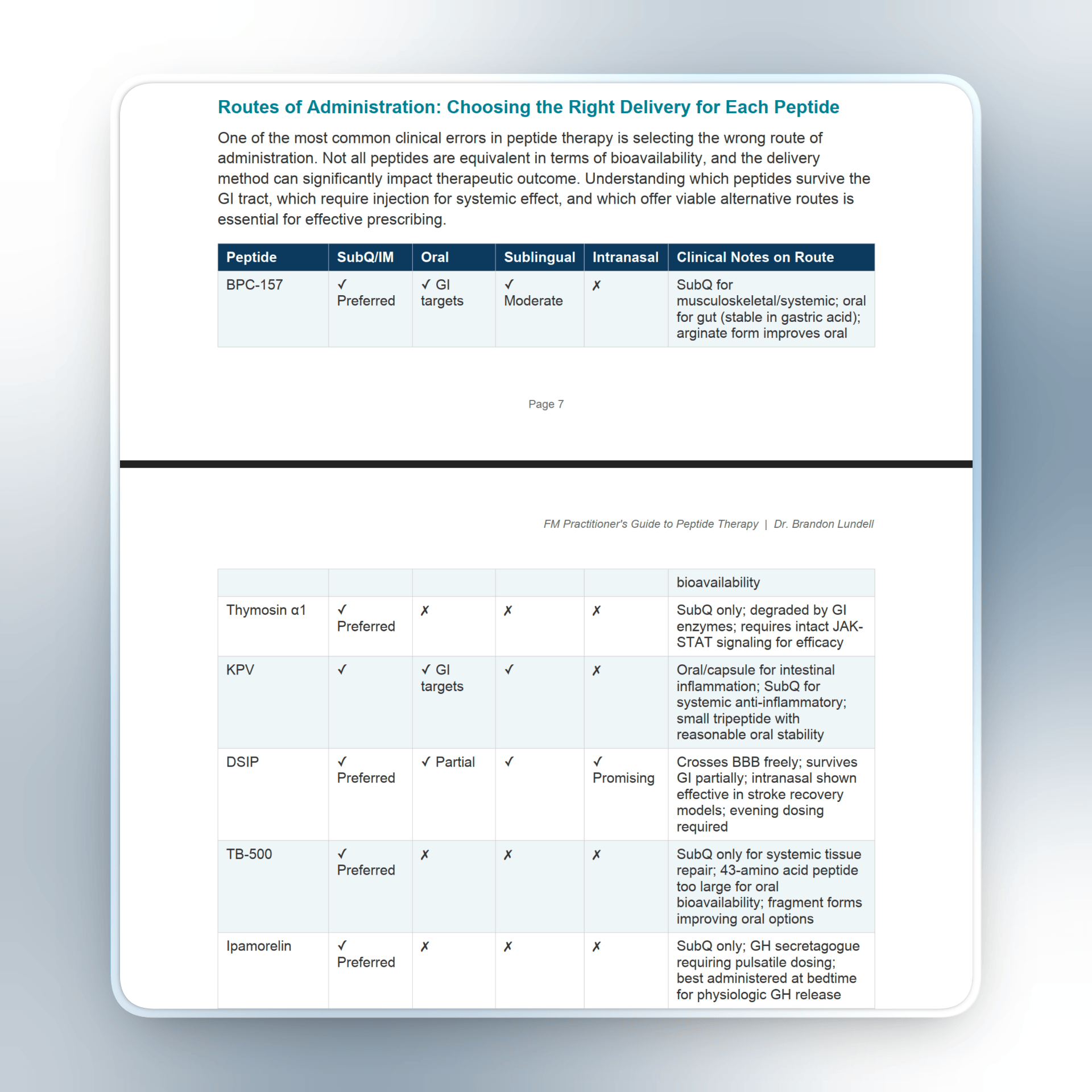
Routes of Administration
A clinical reference table covering subcutaneous, oral, sublingual, and intranasal delivery for all 9 peptides — which survive the GI tract, which require injection for systemic effect, and the clinical rationale for matching route to target tissue. Includes notes on bioavailability, formulation considerations, and common prescribing errors.
The Foundation-First Protocol: 4-Pillar Cellular Optimization
The complete pre-peptide supplement protocol organized across four pillars: mitochondrial bioenergetics, membrane integrity and receptor function, antioxidant defense and redox balance, and methylation and epigenetic support. Specific forms, doses, and timing for each, with the biochemical rationale for why each pillar must be addressed before peptide introduction.
Clinical Sequencing: The 4-Week Pre-Peptide Protocol
How to implement the foundational protocol before any peptide is introduced, which functional lab markers confirm cellular readiness, and how to establish the objective baseline that allows you to measure peptide therapy outcomes rather than estimate them.
Patient Selection and Contraindications
Which patients respond best, which clinical presentations to prioritize, and the relative contraindications — active malignancy, pregnancy, immunosuppressive therapy, pediatric patients, bleeding disorders — that require careful risk-benefit analysis before proceeding.
Safety, Sourcing, and Quality Assurance
How to evaluate peptide sources: 503B outsourcing facilities, certificate of analysis requirements, HPLC purity standards, endotoxin testing, and cold-chain handling. Covers storage, reconstitution technique, and the current regulatory landscape including FDA category 2 compounding restrictions.